 Interview Video List
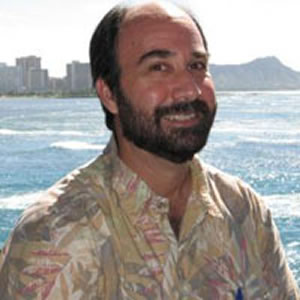
Prof. Dr. Robert H. Richmond, Director of Kewalo Marine Laboratory of University of Hawaii at Manoa, shared his views and insights on the ocean discharge of the ALPS-treated, radioactively contaminated water from the damaged Fukushima Daiichi Nuclear Power Plant in a video-interview on 6 May 2024.
He opened by clarifying that the International Atomic Energy Agency didn't give a wholesale endorsement for the ocean discharge. The IAEA instead merely confirmed that the ocean discharge is in compliance with the presently acccepted standards, some of which are outdated and even obsolete, and didn't address the question of what impact the ocean discharge may have on the marine ecosystem and the people whose livehoods depend on it. The IAEA will not assume responsibility should anything go wrong. He then went on to say that he does not view the IAEA to be fully independent as it has a vested financial interest in supporting the nuclear power industry.
He also questioned the IAEA's approach of focusing on tritium as it fails to adequately address the issue the bio-accumulation and transfer of organically bound tritium (OBT) and even acts as a distraction to the main issue, namely, the inconsistencies in the efficiency of ALPS to filter the 62 different radionuclides, some of which are extremely harmful to the environment and human health. He strongly criticised the TEPCO's design of experiment on the bottom fish, which in his view was seriously flawed, and regretted that TEPCO refused to listen to his proposal of legitimate experiment design.
He refuted the notion that "the best solution to pollution is dilution", pointing out that it fails to account for the damage to the marine ecosystem, the risk of ionizing radiation, and the transfer pathway of OBT and radionuclides from plankton all the way up through bottom fish and its predators to seafood on the dinner table.
He believes there are better alternative to ocean discharge, such as using the treated contaminated water to make concrete to build seawall, underground barrier and bunkers to protect the ground soil. He believed it was a shame for the Japanese government and the TEPCO to make the decision of ocean discharge on the calculation of expenditure, in complete disregard of the well-being of the community of Pacific islands, who have nothing to gain but everything to lose and are already suffering some of the highest rates of cancer in the world.
He believes newly available techniques can be harnessed to close the knowlege gap and answer some of the fundamental questions of the impact of small-dose, long term on the marine eco-system and human health. He also believes it's still not too late for the Japanese authority and the TEPCO to change course, stop the ocean discharge and adopt a more science-based alternative.
 Interview Video List
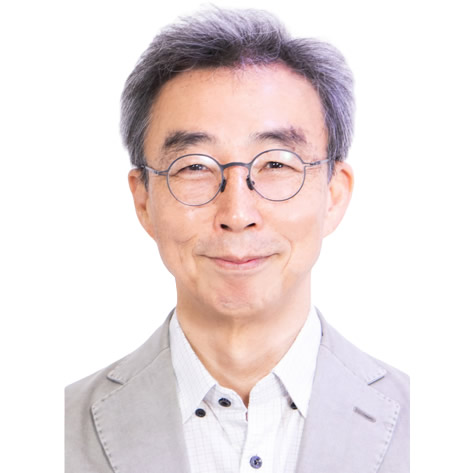
Prof. Paek Do-Myung, Professor Emeritus of the Graduate School of Public Health of Seoul National University, shared his views and insights on the ocean discharge of the ALPS-treated, radioactively contaminated water from the damaged Fukushima Daiichi Nuclear Power Plant in a face-to-face interview on 13 May 2024.
He began by questioning the International Atomic Energy Agency (IAEA) final report, which he believed to have failed to take into account all the possibilities involved in the ocean discharge that may take three decades or more. It's the sloppy and evasive attitude of TEPCO and the Japanese governments towards these potential uncertainties that undermined the credibility of the underlying scientific assumptions and that of the final report, which was built on these assumptions. The final report, which was "neither a recommendation nor an endorsement" of the ocean discharge, which was "a national decision by the government of Japan", violated IAEA's own Principle of Justification.
He further stated that the Advanced Liquid Processing System (ALPS) is likely not as effective as the Japanese government has claimed, as the measurement of the efficacy of this filtration system covers merely 62 radionuclides, leaving many others out. Moreover, even the methodology of the measurement is questionable due to inconsistencies and unreliable background reference, calling into question its claimed capability to filter multiple key radionuclides such as carbon-14, cobalt-60, iodine-129, strontium-90 and cesium-137 to below safe levels.
He believes that while the ocean discharge may be the most convenient and least costly solution to the Japanese government, it could have unexpected adverse effect to the marine environment. The current ocean discharge plan failed to account for complex ecological and biological changes such discharge may give rise to, which take years of meticulous observation to accurately evaluate, rather than oversimplified theoretical modeling.